
The Future of NFTs Applications: Art, Real Estate, Virtual Reality Gaming and Beyond: In-Depth Analysis
Updated: Aug 3
It was a wild, unprecedented ride. In 2021, the entire world watched in sheer disbelief as pixelated digital monkeys and generative art pieces sold for millions of dollars at elite auction houses. The hype was intoxicating. It dominated headlines and boardroom discussions alike. But it was also undeniably unsustainable. It was a speculative bubble fueled by cheap capital and a fundamental misunderstanding of the underlying technology.
Today, the dust has finally settled. As we navigate the maturing digital economy of 2026, the conversation around Non-Fungible Tokens (NFTs) has fundamentally evolved. We are no longer just talking about digital collectibles or speculative profile pictures. The mania has been replaced by utility. We are witnessing the birth of a verifiable, interoperable digital property layer.
To understand the future, we must strip away the jargon. NFTs are, at their core, just a technology. They are immutable, programmable digital receipts stored on a decentralized blockchain. They mathematically prove that you—and only you—own a specific asset. And right now, that underlying technological framework is quietly revolutionizing industries that touch our daily lives and our global economy.
From the video games we play in our living rooms to the physical houses we live in, the era of tokenized utility has arrived. The focus has shifted from what an NFT looks like to what an NFT can actually do.
Let's explore how NFTs are aggressively expanding far beyond the traditional art world.
Key Highlights
NFTs are evolving from collectible art to functional digital assets with real-world utility.
Virtual reality gaming now offers "Play-and-Own" models, enabling true digital ownership and secondary market liquidity.
Virtual worlds leverage NFTs for digital identity, avatar wearables, and token-gated experiences.
Real estate tokenization transforms physical property investment with fractional ownership and automated cash flow.
NFTs empower creators and developers by providing perpetual royalties, decentralized monetization, and open-source collaboration.
Virtual Reality Gaming Revolution: From "Play-to-Earn" to "Play-and-Own"
The global video game industry is a multi-billion dollar behemoth, significantly larger than the music and film industries combined. However, for decades, it has operated on a strict, highly extractive, one-way economic model.
You pay $70 for a premium game. You spend hundreds of hours unlocking rare items, building powerful characters, and grinding for digital currency. But when you turn off the console or when the studio decides to shut down the game's servers, you own absolutely nothing. The game studio holds all the cards. Your digital assets are merely rented lines of code on a centralized database.
NFTs are systematically shattering this walled garden.
Early iterations of crypto gaming gave us "Play-to-Earn" (P2E) models, famously popularized by titles like Axie Infinity during the last bull run. The premise was revolutionary but economically flawed. Players were financially rewarded for playing, but the in-game economies were often hyper-inflationary. They relied almost entirely on a constant influx of new users to sustain the massive token payouts. When the new users stopped arriving, the economies collapsed. It felt more like a tedious digital job than an engaging game.
In 2026, the industry has aggressively pivoted. We have successfully transitioned to the "Play-and-Own" model. The focus has shifted back to what actually matters: making incredible, highly engaging games where ownership is simply a background feature, not the primary selling point.
True Asset Ownership and Liquidity

When you defeat a boss and find a legendary sword in a modern Web3 game, it is instantly minted as an NFT directly into your self-custodial digital wallet. You actually, legally own it. If you decide to stop playing the game after six months, your time and effort are not lost. You can sell that digital sword on an open, decentralized marketplace to another player, instantly recouping your investment in liquid cryptocurrency.
The Dream of Interoperability
This is the holy grail for both players and developers. Because the game assets live on a public, permissionless blockchain rather than on a private corporate server, they can technically be carried across different games and different ecosystems. A unique character skin earned in a gritty fantasy RPG could theoretically be worn by your avatar in a futuristic, neon-lit racing simulator. While technical challenges remain regarding how different game engines render these assets, the foundational ownership layer is already in place.
Sustainable Developer Royalties
For game studios and independent developers, NFTs introduce a wildly sustainable, long-term revenue model. Instead of relying solely on the initial game sale or predatory micro-transactions, studios can code smart contracts to automatically enforce royalties. They can program the NFT to pay the studio a 5% royalty every single time that in-game item changes hands on the secondary market, forever. It perfectly aligns the financial incentives of the creators with the long-term longevity and health of the game's economy.
Reputation and Soulbound Tokens (SBTs)
Gaming is also pioneering the use of non-transferable NFTs, known as Soulbound Tokens (SBTs). These tokens cannot be sold or traded. Instead, they act as a permanent digital resume. They verify a player's in-game achievements, their tournament rankings, and their behavior. SBTs ensure that a player's digital reputation is immutable, combating cheating and fostering healthier, more accountable gaming communities.
The future of gaming is not about forcing complex crypto mechanics down players' throats. It is about making the blockchain entirely invisible. Players simply know that their digital time, effort, and skill finally possess real-world, liquid value.
Virtual Worlds and NFTs: The Maturation of the Metaverse

A few years ago, the word "Metaverse" became a corporate buzzword that left many everyday users rolling their eyes. Billions of dollars were poured into clunky, empty digital spaces. However, stripping away the premature marketing fluff reveals a very real, rapidly evolving digital frontier that is finally coming into its own.
Virtual worlds are persistent, shared, three-dimensional spaces where users can socialize, work, collaborate, and trade. Think of established platforms like Decentraland or The Sandbox, alongside the rapidly emerging, hyper-realistic environments built on the powerful Unreal Engine 5. In these sprawling digital societies, NFTs are not just accessories; they are the foundational building blocks of all commerce and interaction.
They provide the vital infrastructure for a functioning digital economy.
Digital Identity and Avatar Customization
In the physical world, your identity is verified by a government-issued passport or a driver's license. In a decentralized virtual world, your identity is verified by an NFT. These tokens represent your unique avatar, your digital clothing (often referred to as wearables), and your access passes to exclusive, token-gated virtual events.
Major fashion brands have recognized this massive shift. Giants like Nike, Gucci, and Louis Vuitton are no longer just selling physical shoes and handbags; they are generating tens of millions of dollars by selling limited-edition, verifiable NFT wearables for digital avatars. In a world where we spend increasingly more time socializing online, digital flexing has become just as important—if not more so—than physical flexing.
Virtual Commerce and "Phygital" Goods
Virtual worlds are rapidly becoming prime commercial real estate for massive global brands. Musicians are hosting massive, fully interactive digital concerts where the VIP backstage passes are verified via NFTs.
More importantly, we are seeing the rise of "phygital" goods—the seamless blending of physical and digital items. Brands are opening massive virtual storefronts where purchasing an NFT wearable for your avatar automatically triggers a smart contract that ships the exact same physical item to your actual doorstep. The rigid boundaries between physical retail shopping and immersive digital experiences are completely dissolving.
Empowering the Creator Economy
The Metaverse fundamentally empowers independent digital creators. If you are a talented 3D artist or architect, you can design bespoke virtual furniture, mint it as an NFT, and sell it directly to users looking to customize and decorate their digital homes.
You do not need a massive corporate publisher. You do not need a physical supply chain, a warehouse, or a shipping logistics company. You simply need a creative vision, an internet connection, and a decentralized marketplace. This direct-to-consumer model allows creators to capture 100% of the value they generate.
The Metaverse of 2026 is no longer a lonely, blocky landscape filled with speculators. It is a vibrant, interconnected network of digital micro-economies, entirely powered and secured by the verifiable ownership that NFTs uniquely provide.
Real Estate: The Tokenization of the Physical World
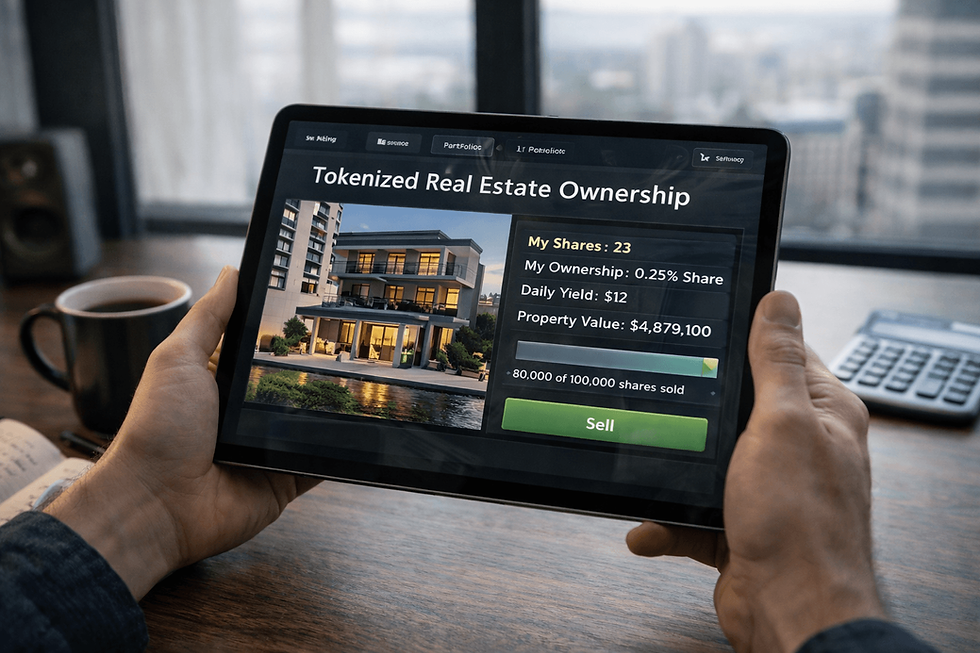
This is where the narrative shifts from strictly digital environments to profoundly physical, real-world impact.
If you truly want to understand the disruptive, world-changing power of NFTs, look at the global real estate market. It is undeniably the largest asset class on the planet, valued in the hundreds of trillions of dollars. It is also notoriously illiquid, heavily gated by institutional middlemen, and completely inaccessible to the average young person or retail investor.
Buying a physical house or investing in a commercial building involves mountains of confusing paperwork. It requires expensive title agencies, escrow companies, strict credit checks, and massive, prohibitive down payments. It is a slow, archaic, and deeply inefficient process.
NFTs—specifically operating under the umbrella of Real-World Asset (RWA) tokenization—are aggressively fixing this broken system.
When discussing this sector, we must distinguish between two very different, but equally fascinating, types of real estate NFTs: Virtual Land and Tokenized Physical Property.
The Virtual Land Market
Just as physical cities have prime real estate in downtown districts, virtual worlds have highly sought-after digital land. Platforms divide their massive maps into finite, unique plots of land, each represented by a single NFT.
But why would someone spend thousands of dollars on digital land that doesn't physically exist? The answer is simple: Traffic and attention.
If you own a plot of virtual land near a major digital hub, a popular gaming arena, or a celebrity's virtual mansion, you possess a highly valuable, captive audience. Brands will eagerly pay you thousands of dollars to rent that specific digital space to erect virtual billboards. Independent developers will buy it to build interactive games or virtual casinos. It is a highly speculative, yet undeniably fascinating, new form of digital real estate development that mirrors the physical world.
The Physical Real Estate Revolution (RWAs)
This is the multi-trillion-dollar use case that is actively restructuring global finance.
In 2026, we are actively taking physical, brick-and-mortar properties and representing their legal ownership directly on the blockchain. Institutional platforms like Zoniqx, RealT, and Lofty are leading this massive charge, bringing Wall Street-level assets to Main Street investors.
Here is exactly how physical real estate tokenization works in practice:
1. Legal Structuring: A physical property (for example, a $10 million commercial apartment complex in Miami) is legally purchased and placed into a protective legal wrapper, typically a Special Purpose Vehicle (SPV) like a US-based LLC or a Wyoming DAO.
2. Fractionalization: The legal ownership of that specific LLC is then divided into thousands of digital tokens (NFTs) on a blockchain like Ethereum or Hedera. Instead of needing $10 million to buy the entire building, the property is split into 100,000 individual tokens priced at an accessible $100 each.
3. Instant Liquidity and Access: An everyday user can log on and buy 5 tokens for $500. Through the legal structure of the SPV, that user now legally owns a fractional share of that physical apartment complex.
4. Automated Cash Flow: Through the flawless execution of smart contracts, the monthly rent collected from the physical tenants living in the building is automatically converted into digital stablecoins (like USDC). It is then distributed proportionally to the digital wallets of the token holders every single day, with zero human intervention.
The economic implications of this technological leap are staggering.
Total Democratization of Wealth: You no longer need to be a millionaire or an accredited investor to invest in premium commercial real estate. A university student in London can buy a $50 fraction of a beachfront villa in Bali and start earning passive rental income immediately. It destroys the traditional barriers to entry.
Creating Global Liquidity: Real estate is traditionally a highly illiquid asset. It takes months to list, market, and legally sell a physical house. Tokenized real estate, however, can be bought and sold on decentralized exchanges 24 hours a day, 7 days a week, with instant settlement. It fundamentally transforms houses into liquid assets that trade as easily and quickly as tech stocks.
Eradicating the Middlemen: By placing the title and deed on an immutable blockchain ledger, the desperate need for expensive title insurance, escrow agents, and massive broker fees is drastically reduced. The transaction is mathematically verified by the network and executed instantaneously.
Furthermore, this tokenization allows for massive DeFi integration. Because your property is now an on-chain token, you can easily deposit your tokenized house into a decentralized lending protocol and instantly borrow stablecoins against its value, all without a credit check or a bank loan officer.
The tokenization of Real-World Assets is not a distant, futuristic theory. It is happening right now, successfully bridging the massive gap between traditional global finance and decentralized technology.
The Triad of Opportunity: Investors, Creators, and Developers
This massive, undeniable expansion of NFT utility beyond simple art creates distinct, highly lucrative opportunities for the three vital pillars of the digital economy.
For the Investors: A Shift to Utility and Yield
The speculative, chaotic era of flipping digital art for quick overnight profits is largely over. The modern, sophisticated NFT investor focuses heavily on utility, underlying asset value, and sustainable yield.
Portfolio Diversification: Retail investors can now hold a single digital wallet that contains fractionalized physical real estate paying daily dividends, high-yield in-game assets, and early-stage virtual land. It is the ultimate diversified portfolio, entirely self-custodied.
Predictable Passive Income: Real-World Asset platforms provide steady, automated cash flow backed by tangible, physical assets. This offers a massive, secure hedge against the wild volatility of the broader cryptocurrency market.
Decentralized Venture Philanthropy: Investors can directly fund independent game studios or metaverse builders by purchasing early-access NFT passes, effectively acting as decentralized venture capitalists and sharing in the project's long-term upside.
For the Creators: Capturing True Value
The early internet gave creators a massive global audience. NFTs finally give them a functioning economy.
Direct Monetization: Musicians, 3D artists, architects, and writers can sell their digital work directly to their most dedicated fans. They no longer have to surrender 50% of their hard-earned revenue to centralized tech platforms like Spotify, YouTube, or Apple.
Perpetual Royalties: The unique ability to code secondary-market royalties directly into an immutable smart contract ensures that creators are compensated every single time their work increases in value and changes hands. It is a fundamental, historic shift in how artists capture the immense value they create.
Intimate Community Building: NFTs act as verifiable membership passes. Creators can build deeply engaged, token-gated digital communities where their holders receive exclusive access, voting rights on future projects, and early content drops. It turns fans into active stakeholders.
For the Developers: The Open-Source Sandbox
For software engineers, game designers, and financial architects, the blockchain is a massive, open-source playground.
Plugging into Open Economies: Developers no longer have to build complex, entire financial infrastructures from scratch. They can simply plug their games or virtual worlds directly into existing decentralized finance (DeFi) protocols to handle in-game trading, lending, and complex asset swaps.
Programmable, Dynamic Assets: Developers can create highly complex, evolving digital assets. Imagine a virtual sword in an RPG that physically changes its appearance, glows brighter, and increases its stats based entirely on how many battles it has won on the blockchain.
Inter-Protocol Collaboration: Because the underlying infrastructure is entirely open-source, developers can seamlessly integrate assets from completely different projects. A tokenized real estate protocol could easily partner with a virtual world to build exact, interactive 3D digital replicas of their physical tokenized houses.
The Future of NFTs in 2026: Gaming, Virtual Worlds & Real Estate - At a Glance

Conclusion
The greatest trick NFTs will ever pull is completely disappearing from our vocabulary.
In the near future, we will not talk about "buying an NFT." When you purchase a digital concert ticket, a fractional share of a vacation home, or a legendary digital sword, you will simply use a beautifully designed, streamlined application on your smartphone. You will not need to understand complex hash rates, fluctuating gas fees, or cryptographic seed phrases.
The blockchain will act exactly like the internet’s underlying TCP/IP protocols do today. It will simply be the invisible, unshakeable digital plumbing running quietly in the background. It will secure your ownership, execute your contracts, and facilitate instant, global value transfer without you ever noticing it is there.
We are steadily moving away from a web where we simply rent our digital lives from massive, centralized tech monopolies. We are moving toward a web where we actively, legally own our digital footprint. The transition is undeniably messy. It is complex, heavily regulated, and prone to growing pains. But it is absolutely inevitable.
NFTs were never just about pixelated art. The art was simply the Trojan Horse. It introduced the mainstream world to the highly disruptive concept of digital scarcity. Now that the core concept is understood, the real, intensive work of rebuilding the global economy has officially begun.
From the hyper-competitive arenas of Web3 gaming to the fractionalized commercial skyscrapers of tokenized real estate, the verifiable digital property layer is here to stay.
Join the conversation around NFTs and the future of digital ownership. Get actionable guidance and case studies exclusively on BitCoinBlog.

AUTHOR
Jan Matula
Graduate of EUBA University, experienced Forex and Stocks trader since 2008, early Bitcoin investor and crypto trader since 2021.
This content is for informational purposes only and should not be taken as solicitation, recommendation, endorsement or investment advice. It is crucial for you to conduct your own research and due diligence to make informed decisions, as any investment will be your sole responsibility. Please review our disclaimer and risk warning.

