
What is Bitcoin? A Beginner's Guide to the World of Cryptocurrency
Updated: Jul 22
Bitcoin is the first widely adopted decentralised digital currency. It introduced a system that allows value to move across borders without the need for banks or intermediaries. Since its launch in 2009, Bitcoin has had a significant impact on conversations around money, ownership and financial infrastructure.
Adoption continues to grow. Industry estimates suggest that over 200 million people worldwide have interacted with Bitcoin, either directly or through financial products tied to it. This level of engagement is indicative of Bitcoin's dual role as both a technological innovation and a financial asset.
Bitcoin is a noteworthy currency due to its operation outside traditional monetary systems. It is governed by open-source code rather than central institutions. Transactions are verified by a distributed network, creating a public and tamper-resistant ledger.
For those new to the subject, Bitcoin is more than a speculative asset. It is the foundation of the modern cryptocurrency ecosystem. Comprehending the mechanics of digital assets is instrumental in elucidating their broader functionality.
Key Highlights:
Bitcoin is the first decentralized digital currency, introduced in 2009.
It operates outside of traditional financial systems, governed by open-source code.
Bitcoin is secured by cryptography and uses a public ledger called the blockchain.
The total supply of Bitcoin is capped at 21 million coins, creating scarcity.
Bitcoin is used for cross-border payments, as a store of value, and has growing institutional interest.
Understanding Bitcoin as a Digital Currency
Bitcoin is a form of digital currency created in 2009 by an unknown person or group using the name Satoshi Nakamoto. Unlike traditional currencies issued by governments, Bitcoin is decentralized, meaning it is not controlled by any central authority or entity. Instead, transactions are verified by network nodes through cryptography and recorded on a public ledger called the blockchain.
Bitcoin is a peer-to-peer currency, allowing individuals to send and receive payments directly without relying on banks or intermediaries. This feature makes Bitcoin an attractive option for many, as it can facilitate low-cost transactions across borders.

The Decentralized Nature of Bitcoin
One of the defining characteristics of Bitcoin is its decentralized nature. Unlike traditional currencies, which can be influenced by political decisions, inflation, or market volatility, Bitcoin operates autonomously. This autonomy is achieved through blockchain technology.
The blockchain is a secure and distributed ledger that records all Bitcoin transactions. Each transaction is grouped into blocks and added to the chain, creating an unalterable history. Because this ledger is shared among all users, it is challenging for any single entity to manipulate it.
If the idea of decentralization excites you, know that it provides users with greater control over their assets. You can transact without needing a bank's approval, and the peer-to-peer aspect reduces transaction fees significantly.
"As 'Bitcoin knowledge' continues to unfold, it becomes evident that its decentralized nature is what sets it apart from conventional forms of currency. The blockchain technology that powers Bitcoin ensures that transactions are not only secure but also transparent, offering a level of accountability previously unseen in traditional finance."
How Bitcoin Transactions Work

Bitcoin transactions involve a few key steps. First, when you want to send Bitcoin to someone, you create a transaction request. This request includes your Bitcoin address (a string of letters and numbers), the recipient's address, and the amount you want to send.
Once the transaction is created, it is broadcasted to the network. Here, miners come into play. They are individuals or groups using powerful computers to verify transactions. Miners solve complex mathematical puzzles to add new blocks to the blockchain and are rewarded with newly created bitcoins for their efforts.
Once the transaction is verified and added to the blockchain, it becomes permanent and can no longer be altered. This process typically takes around 10 to 30 minutes, but it can vary depending on network congestion.
Real Uses of Bitcoin Today
Bitcoin's practical applications extend beyond speculation. Cross-border payments represent a significant application of blockchain technology. Bitcoin transactions are processed independently of traditional banking networks. This can reduce friction in international transactions.
Recent analysis shows that Bitcoin’s market structure could face a significant retracement phase before any sustained upside unfolds.
Bitcoin also serves as a store of value. Some investors regard it as a digital gold standard. Its fixed supply is attractive to those seeking protection against currency debasement.
In regions where banking infrastructure is limited, Bitcoin offers a valuable solution by providing financial access. Users are able to conduct transactions with only an internet connection and a wallet. This expansion fosters increased participation in global commerce.
In the business world, there has been a noticeable increase in the acceptance of Bitcoin as a form of payment. While adoption varies by region, merchant integration continues to grow. Payment processors convert Bitcoin into local currency when required.
Institutional interest has also increased. Financial firms are now offering Bitcoin investment products. This is indicative of a growing recognition of Bitcoin as an emerging asset class.
As the infrastructure matures, usage continues to evolve. Bitcoin's role encompasses payments, savings, and financial experimentation.
The Role of Bitcoin in the Financial World
Bitcoin's significance extends beyond just being a digital currency. It has the potential to reshape the financial world in several ways.
Financial Inclusion: Bitcoin provides access to financial services for people without traditional banking systems. This feature is crucial in underserved areas where conventional banks may not be available. By enabling easy transactions and savings, Bitcoin can empower individuals economically.
Investments and Speculation: Bitcoin has gained popularity as an investment asset. Many people view it as "digital gold," a store of value that can hedge against inflation. Over the years, Bitcoin's price has experienced extreme volatility, making it a subject of speculation among investors. For beginners looking to explore this avenue, it's important to remember that investing in Bitcoin involves risks, and one should only invest what they can afford to lose.
Innovation in Financial Services: Bitcoin has paved the way for numerous innovations within the financial sector. Examples include smart contracts and decentralized finance (DeFi). These developments could streamline financial processes and reduce costs, benefiting consumers and businesses alike.
Despite these advantages, it is essential to be aware of the risks associated with Bitcoin. This cryptocurrency can be susceptible to hacking, scams, and regulatory changes. Thus, it is crucial to approach your Bitcoin journey with caution and informed decisions.

Bitcoin Mining and Supply Basics
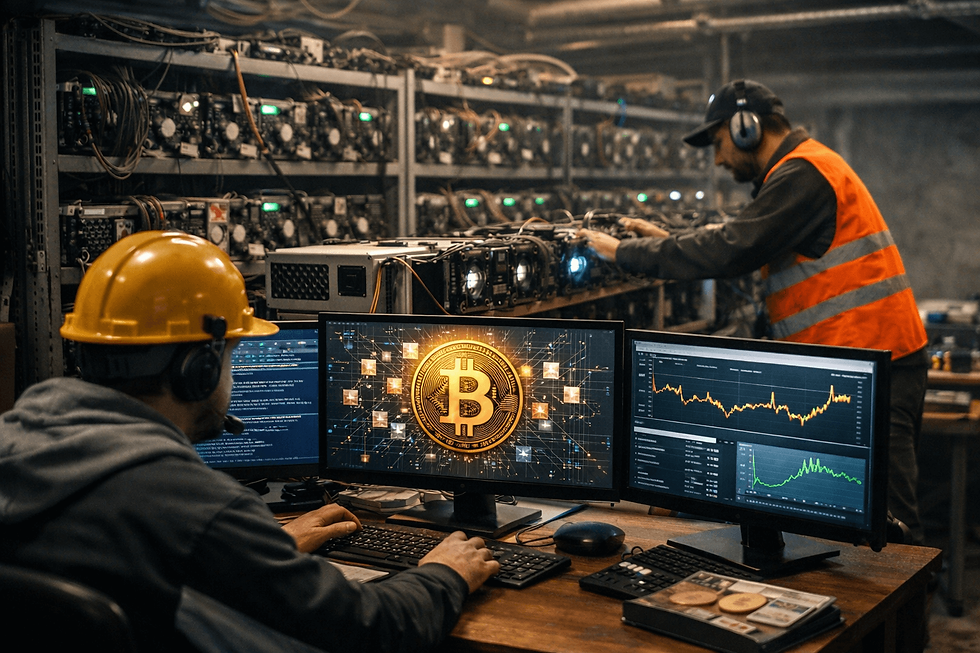
Bitcoin mining is the process of securing the network and introducing new coins into circulation. In the field of cryptography, miners utilise advanced computing hardware to solve complex puzzles. The first miner to solve a puzzle adds a new block to the blockchain.
In return, miners receive newly minted Bitcoin along with transaction fees. This reward is designed to encourage network participation. In the field of mining, heightened competition fosters enhanced security measures, as the economic viability of altering transaction histories becomes significantly diminished.
Bitcoin issuance adheres to a predictable schedule. It should be noted that approximately every four years, mining rewards are reduced by half. This event is known as the halving. This has a beneficial effect on the rate at which new supply enters circulation.
As of 2025, the total supply of Bitcoin had already surpassed 19.6 million, indicating a limited remaining supply. It is anticipated that the final coin will be mined around the year 2140.
This scarcity model mirrors precious resources. Controlled issuance supports long-term predictability. Mining plays a crucial role in maintaining Bitcoin's decentralised nature and ensuring its resistance to manipulation.
New forecasts indicate that Bitcoin’s price outlook remains highly varied in 2026, highlighting both possible volatility and upside potential depending on macro and institutional factors.
Getting Started with Bitcoin: A Beginner's Guide
If you're interested in diving into the world of Bitcoin, follow these steps to get started safely and effectively:
Research and Education: Start by learning about Bitcoin, blockchain technology, and the cryptocurrency landscape. Many free resources and online platforms offer courses focused on cryptocurrency.
Choose a Wallet: A Bitcoin wallet is necessary to store your bitcoins securely. There are several types of wallets to consider, including hardware wallets, software wallets, and mobile wallets. Choose based on your needs and the level of security you desire.
Buy Your First Bitcoin: Once you have a wallet, you can purchase Bitcoin from an exchange. Popular exchanges include Coinbase, Binance, and Kraken. Remember to use secure passwords and two-factor authentication to protect your account.
Start Small: For beginners, it's wise to start with a small investment. Gaining experience with Bitcoin's ups and downs will help you develop a better understanding.
Stay Informed: The world of cryptocurrency is ever-evolving. Regularly seek news and updates from reputable sources to stay informed about price trends, regulatory changes, and technological advancements in the Bitcoin space.
By following these steps, you can confidently enter the world of Bitcoin, armed with knowledge and resources to make informed decisions.
Read More:
Beginner Misconceptions
New participants often encounter misconceptions about Bitcoin. It is a common misconception that Bitcoin transactions are anonymous. In reality, transactions are publicly recorded. Privacy is dependent on the management of user identity exposure.
Another misconception is that Bitcoin is unregulated. While the network itself is decentralised, exchanges and service providers are subject to regulatory oversight in many regions.
Some novices assume that Bitcoin guarantees profit. Price appreciation is not guaranteed. Markets are subject to fluctuations based on demand, sentiment, and macroeconomic factors.
Additionally, there is some uncertainty regarding ownership. Holding Bitcoin on an exchange differs from controlling private keys in a personal wallet. Custody choices have a direct impact on asset security.
It is important to clarify misconceptions so that beginners can approach Bitcoin with realistic expectations. Education is a proven method of reducing avoidable mistakes.
The Bottom Line: Why Bitcoin Matters
In summary, Bitcoin represents a revolutionary change in how we think about money and transactions. Its decentralized nature, ability to facilitate peer-to-peer transactions, and potential to reshape financial systems highlight its significance in today’s world.
As a beginner, understanding Bitcoin is the first step toward exploring the broader world of cryptocurrencies.
By educating yourself, setting up a secure wallet, and making informed investments, you can navigate this landscape with confidence and clarity.
As you embark on your cryptocurrency journey, remember that patience and continuous learning are crucial. With the right information and a cautious approach, Bitcoin can empower you in more ways than you may have imagined.

AUTHOR
Jan Matula
Graduate of EUBA University, experienced Forex and Stocks trader since 2008, early Bitcoin investor and crypto trader since 2021.
This content is for informational purposes only and should not be taken as solicitation, recommendation, endorsement or investment advice. It is crucial for you to conduct your own research and due diligence to make informed decisions, as any investment will be your sole responsibility. Please review our disclaimer and risk warning.


