
How to Trade Futures on Kraken: Leverage Trading Explained. A Beginner's Guide
Updated: Aug 18
TABLE OF CONTENT
Futures trading has become a major part of the crypto market. Many traders now prefer it over spot trading. This is mainly due to the use of leverage. It allows traders to open larger positions with less capital. However, it also increases risk.
This guide explains how to trade futures on Kraken in a clear and structured way. The platform is known for its strong security and transparent fee system. It supports a wide range of futures contracts. Both beginners and experienced traders use it.
The global crypto derivatives market crossed $3 trillion in daily volume in recent reports. A large share of this volume comes from futures trading. This shows the growing demand for leveraged trading tools.
Today, you will learn how to trade futures on Kraken step by step. It also explains leverage, fees, and risks. The goal is to give accurate and practical information for informed trading decisions.
What is Crypto Futures Trading?
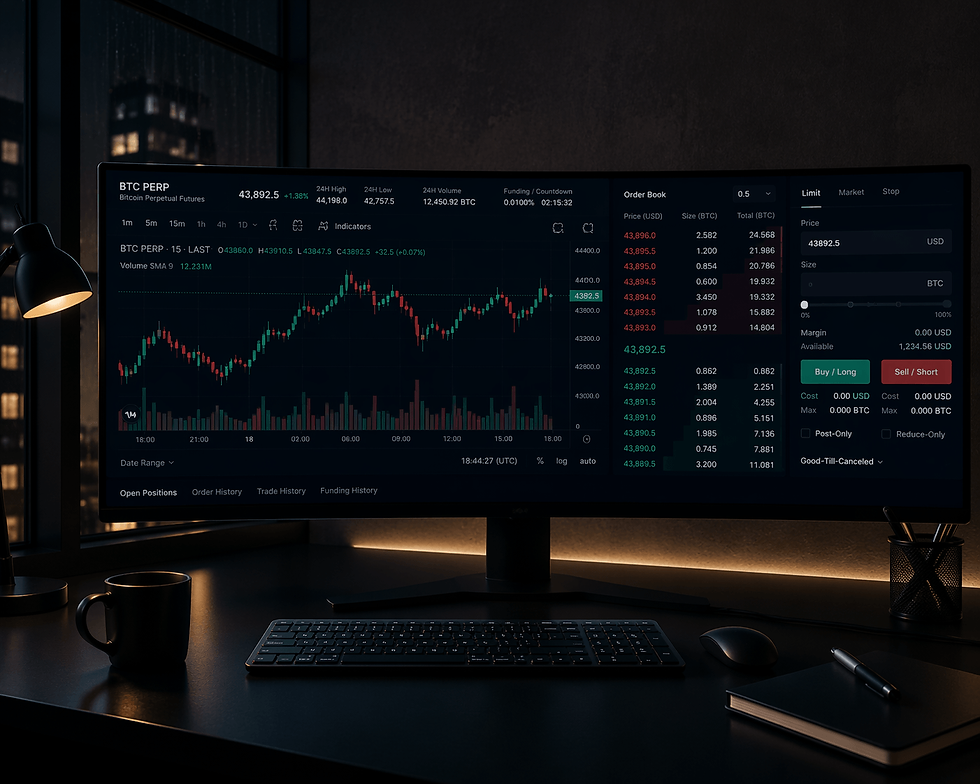
A futures contract is an agreement to buy or sell an asset at a fixed price on a future date. In crypto markets, the asset is usually Bitcoin or Ethereum. Traders do not need to own the asset to enter a trade. They only take a position based on price movement.
There are two main types of contracts. These include perpetual contracts and fixed expiry contracts. Perpetual contracts do not have an expiry date. They are the most common in crypto trading today. Fixed contracts settle on a set date. Most traders who learn how to trade futures on Kraken start with perpetual contracts due to their flexibility.
How Futures Trading Works in Crypto
Futures trading works by predicting price direction. A trader can open a long position if they expect the price to rise. A trader can open a short position if they expect the price to fall. This allows profit in both bull and bear markets.
Each trade involves margin. Margin is the amount of capital used to open a position. The exchange allows traders to use leverage. This increases the position size beyond the actual balance. When users understand how to trade futures on Kraken, they learn how margin and leverage work together.
The position remains open until it is closed by the trader or liquidated by the system. Price changes directly affect profit and loss. Even small price moves can have a large impact when leverage is used.
Why Traders Use Futures Instead of Spot

Futures trading offers several advantages over spot trading. The biggest advantage is leverage. Traders can control larger positions with less capital. This improves capital efficiency.
Another key benefit is the ability to short the market. In spot trading, profit is only possible when prices rise. Futures trading allows profit during price declines as well. This makes it useful in volatile markets.
Futures are also used for hedging. For example, a trader holding Bitcoin can open a short futures position to reduce risk during a market drop. This strategy is common among experienced users.
Many traders choose this method after learning how to trade futures on Kraken. The platform provides tools that support both basic and advanced trading strategies.
Crypto Futures Risk Disclaimer
Futures trading involves high risk and may not be suitable for all investors. Leverage can increase both profits and losses. Even small market movements can lead to liquidation of your position. Traders should only use funds they can afford to lose. It is important to understand how margin, leverage, and liquidation work before placing any trade. Past performance does not guarantee future results. Always conduct your own research before making trading decisions.
Difference Between Spot Trading and Futures Trading
Understanding the difference between spot and futures trading is important before using leverage. Both methods serve different purposes in the crypto market.
Spot vs. Futures Trading Comparison
Feature | Spot Trading | Futures Trading |
Ownership | User owns the actual crypto asset | No ownership, only contracts |
Profit Direction | Profit only when price increases | Profit in both rising and falling markets |
Risk Level | Limited to invested amount | Higher risk due to leverage |
Leverage | Not available | Available (5x, 10x, 20x or more) |
Capital Requirement | Full amount needed to buy asset | Lower capital required due to leverage |
Use Case | Long-term investing | Short-term trading and hedging |
Liquidation Risk | No liquidation | High risk of liquidation |
Storage | Requires wallet storage | No direct asset storage needed |
This comparison shows why many traders move to futures markets. They offer more flexibility and trading options. However, the risk is also higher. This is why understanding how to trade futures on Kraken is important before getting started.
What is Leverage Trading?

Leverage trading is a core feature of futures markets. It allows traders to control larger positions with a small amount of capital. This is one of the main reasons traders learn how to trade futures on Kraken.
How Leverage Works (With Examples: 5x, 10x, 20x)
Leverage means borrowing funds to increase trade size. It is expressed in multiples such as 5x, 10x, or 20x. For example, if a trader has $100 and uses 10x leverage, they can open a position worth $1,000.
If the price moves in the trader’s favor by 5%, the profit is calculated on $1,000, not $100. This results in a $50 gain instead of $5. The same applies to losses. A 5% move in the wrong direction leads to a $50 loss.
This shows how leverage increases both profit and risk. When users understand how to trade futures on Kraken, they learn to use leverage carefully.
Margin vs. Leverage Explained
Margin is the actual amount of money used to open a trade. Leverage is the multiplier applied to that margin. Both terms are closely linked but not the same.
For example, a trader using $100 as margin with 10x leverage controls a $1,000 position. The margin acts as collateral for the trade. If losses reduce this margin to a certain level, the position may be closed automatically.
Understanding this difference is important when learning how to trade futures on Kraken. It helps traders manage positions more effectively.
Benefits and Risks of Leverage
Leverage offers clear benefits. It improves capital efficiency and allows larger exposure with smaller funds. It also enables traders to take advantage of small price movements.
However, the risks are high. Losses increase at the same rate as gains. High leverage can lead to quick liquidation if the market moves against the position.
Many new traders make mistakes by using maximum leverage. This often results in losing capital quickly. This is why it is important to fully understand how to trade futures on Kraken before using leverage in real trades.
Kraken Futures Overview
Before placing any trade, it is important to understand the platform features. Each exchange offers different tools and limits. Knowing these details helps traders make better decisions.
1) Supported Assets and Trading Pairs
Kraken Futures supports major crypto assets. These include Bitcoin (BTC), Ethereum (ETH), Litecoin (LTC), and a few others. Most trading pairs are based on USD or stablecoin value.
The focus is on high liquidity assets. This helps reduce slippage during trades. Traders who learn how to trade futures on Kraken often start with BTC or ETH pairs due to better volume and tighter spreads.

The platform updates its list based on market demand. However, it does not list as many altcoins as some other exchanges.
2) Maximum Leverage Available
Kraken Futures offers leverage up to 50x on selected pairs. This means traders can control positions that are 50 times larger than their margin.
However, not all pairs offer the same leverage. Some pairs have lower limits to reduce risk. Higher leverage also comes with stricter margin requirements.
Experienced traders may use higher leverage for short-term trades. Beginners are advised to start with low leverage. Understanding how to trade futures on Kraken includes knowing when to increase or reduce leverage.
3) Types of Contracts (Perpetual vs Fixed)
Kraken offers two main types of futures contracts. These are perpetual contracts and fixed maturity contracts.
Perpetual contracts do not have an expiry date. Traders can hold positions as long as they maintain margin. These contracts use a funding rate system to match market prices.
Fixed maturity contracts have a set expiry date. They settle automatically on that date. These are less common in crypto trading compared to perpetual contracts.
Most users who learn how to trade futures on Kraken prefer perpetual contracts due to flexibility.
4) Fee Structure Overview
Fees play an important role in trading performance. Kraken Futures uses a maker and taker fee model. Maker fees are usually lower. Taker fees are slightly higher.

In addition to trading fees, there are funding fees. These are periodic payments between traders. The rate depends on market conditions.
Low fees can improve long-term profitability. This is why many traders consider fees when choosing a platform. Learning how to trade futures on Kraken also includes understanding all cost factors before placing trades.
Before you move to actual trading, it is important to have an active account. You can create an account on Kraken and complete verification to access futures features. This is the first step to start learning how to trade futures on Kraken in real market conditions.
Why Choose Kraken for Futures Trading
Choosing the right platform is important for futures trading. Security, fees, and reliability all matter. Many traders compare multiple exchanges before making a decision. This section explains why Kraken is a preferred choice for many users.
1) Strong Security and Track Record
Kraken is one of the oldest crypto exchanges, founded in 2011. It has maintained a strong security record over the years. The platform uses cold storage for most funds and strict internal controls.
There have been no major exchange-level hacks reported in its history. This builds trust among users. Traders who learn how to trade futures on Kraken often value this level of security.
2) Transparent Fee Structure
Kraken follows a clear fee model. Maker and taker fees are visible before placing trades. There are no hidden charges in the system.
Funding rates are also shown in advance. This helps traders estimate costs. Transparency in pricing is a key reason many users prefer Kraken for futures trading.
3) Regulated and Trusted Platform
Kraken operates under regulatory frameworks in multiple regions. It follows compliance rules for identity verification and trading access.
This reduces the risk compared to unregulated platforms. Many traders prefer regulated exchanges for long-term use. Understanding how to trade futures on Kraken includes working within a safer environment.
4) User-Friendly Trading Interface
The trading interface is simple and structured. Key tools such as charts, order book, and position panel are easy to access.
Both beginners and experienced traders can use the platform without difficulty. This makes it easier to learn how to trade futures on Kraken without confusion.
5) Reliable Liquidity and Order Execution
Kraken offers good liquidity for major trading pairs. This helps reduce slippage during trades. Orders are executed with minimal delay in most cases.
Reliable execution is important for futures trading. It ensures that trades are placed at expected prices. This improves overall trading experience.
Kraken combines security, transparency, and ease of use in one platform. These factors make it a strong choice for futures trading. If you plan to apply what you have learned about how to trade futures on Kraken, starting with a trusted platform can make a difference.
Kraken Futures Pros and Cons
Before choosing any trading platform, it is important to look at both advantages and limitations. A balanced view helps build trust and supports better decision-making. This is especially important for users learning how to trade futures on Kraken.
Pros
Strong security track record
Transparent fee structure
Regulated and trusted platform
User-friendly interface
Good liquidity for major pairs
Cons
Limited altcoin futures compared to competitors
Lower leverage than some offshore exchanges
Not available in all countries
Fewer advanced trading tools than some rivals
Funding rates can vary in volatile markets
What This Means for Traders
Kraken is a strong choice for traders who value security and transparency. It is suitable for beginners and intermediate users. The platform is also preferred by traders who want a regulated environment.
However, some advanced traders may look for higher leverage or more asset options. These features are more common on other exchanges.
For most users, the benefits outweigh the limitations. This is why many traders choose to learn how to trade futures on Kraken instead of using less regulated platforms.
Requirements to Start Futures Trading on Kraken
Before placing any futures trade, users must meet a few basic requirements. These steps ensure account safety and regulatory compliance. It is also a necessary part of learning how to trade futures on Kraken.
1) Account Creation and Verification (KYC)
The first step is to create an account on Kraken. Users need to provide an email address and set a secure password. After registration, identity verification is required.
KYC involves submitting personal details and documents. This may include a government ID and proof of address. Verification levels can affect account limits and access to features.
Futures trading is not available without proper verification. This step ensures compliance with global regulations. Anyone who wants to learn how to trade futures on Kraken must complete this process.
2) Supported Countries and Restrictions
Kraken operates in many regions, but futures trading is restricted in some countries. Regulations vary by location. Certain jurisdictions do not allow leverage trading.
Users must check if futures trading is supported in their country. This information is available on the official platform. Ignoring this step can lead to account limitations.
Understanding regional rules is important when learning how to trade futures on Kraken. It helps avoid unexpected issues later.
3) Minimum Balance Requirements
There is no fixed high minimum to start futures trading. However, traders must maintain enough margin to open positions. The required amount depends on leverage and position size.
Higher leverage reduces the initial margin but increases risk. Traders should keep extra balance to avoid liquidation. Small accounts are more sensitive to price changes.
Managing capital is a key part of trading. Anyone learning how to trade futures on Kraken should focus on maintaining a safe balance before opening trades.
Once these requirements are complete, users can move to funding their account and start trading.
How to Fund Your Kraken Futures Account

Funding the account is the next step after verification. Without funds, it is not possible to open any futures position. This step is simple but must be done correctly. It is an important part of learning how to trade futures on Kraken.
1) Transferring Funds from Spot to Futures Wallet
Kraken uses separate wallets for spot and futures trading. Users must first deposit funds into the main account. After that, funds need to be transferred to the futures wallet.

The transfer process is quick and usually takes a few seconds. There are no major fees for internal transfers. Users can move funds back to the spot wallet at any time.
Most traders keep a small amount in the futures wallet. This helps control risk. When learning how to trade futures on Kraken, it is better to avoid moving the full balance into futures.
2) Supported Deposit Methods
Kraken supports both crypto and fiat deposits. Crypto deposits include assets like BTC, ETH, and USDT. These are the most common for futures trading.
Fiat deposits depend on the user’s region. Bank transfers are widely supported. Some regions may also have card deposit options.
Crypto deposits are faster in most cases. They are often preferred by active traders. Users who understand how to trade futures on Kraken usually choose crypto funding for speed and flexibility.
3) Common Deposit Issues and Fixes
Some users face delays during deposits. This is usually due to network congestion or incorrect details. Choosing the wrong blockchain network can lead to loss of funds.
Always check the deposit address carefully. Confirm the network before sending funds. Small mistakes can cause major issues.
Another common issue is delay in bank transfers. These can take one to three business days. Planning deposits in advance helps avoid trading delays.
Funding the account correctly ensures smooth trading. It is a key step before placing any futures trade.
Understanding the Kraken Futures Trading Interface
Before placing a trade, it is important to understand the trading screen. The interface shows all key data in one place. It helps traders track price, orders, and positions. This step is important when learning how to trade futures on Kraken.
1) Dashboard Overview
The main dashboard shows the selected trading pair and live price. It also displays recent price changes and trading volume. Users can switch between different pairs from this section.
The layout is crafted to provide easy access to all tools. Price charts, order panels, and position details are displayed on the same screen, enabling traders to respond swiftly to market changes. The straightforward drag-and-drop layout can be adjusted according to your preferences and trading style.
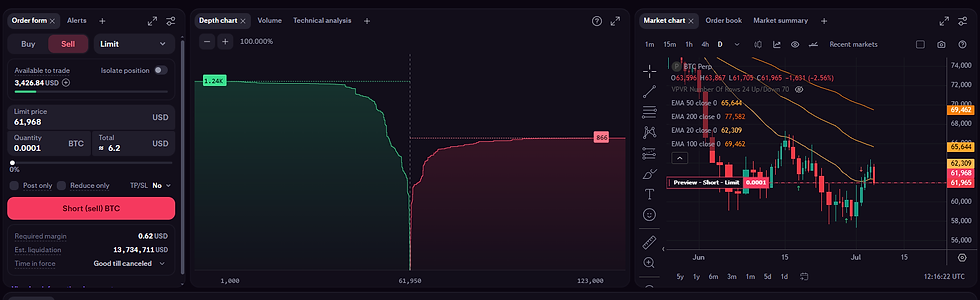

Understanding the dashboard is the first step in learning how to trade futures on Kraken.
2) Order Book and Market Depth
The order book shows all active buy and sell orders. Buy orders are listed below the current price. Sell orders are listed above it. This helps traders see market demand and supply.
Market depth shows how strong buying or selling pressure is at different price levels. Large orders can affect price movement. Watching the order book helps traders make better entry and exit decisions.

Many traders rely on this data when they learn how to trade futures on Kraken.
3) Charting Tools and Indicators
Kraken provides basic charting tools for analysis. Users can switch between time frames such as 1 minute, 5 minutes, or 1 hour. This helps in short-term and long-term analysis.
Indicators like moving averages and RSI are available. These tools help traders study trends and momentum. Charts play a key role in planning trades.
Understanding charts is important when learning how to trade futures on Kraken.
4) Position Panel (PnL, Margin, Liquidation Price)
The position panel shows details of active trades. It includes profit and loss (PnL), margin used, and liquidation price. These values update in real time.
PnL shows whether the trade is in profit or loss. Margin shows the capital used in the trade. The liquidation price is the level where the position will be closed automatically.

Monitoring this panel is critical. It helps traders manage risk and avoid large losses. This is a key part of understanding how to trade futures on Kraken.
Types of Orders in Kraken Futures
Order types define how a trade is executed. Choosing the right order type can affect entry price and risk. This is an important step when learning how to trade futures on Kraken.

1) Market Orders
A market order executes instantly at the current price. It is the fastest way to enter or exit a trade. Traders use it when speed is more important than price.
However, the final execution price may differ slightly. This is due to market movement and liquidity. This difference is known as slippage. Traders who learn how to trade futures on Kraken use market orders in fast-moving conditions.
2) Limit Orders
A limit order allows traders to set a specific price. The trade only executes when the market reaches that price. This gives better control over entry and exit.
Limit orders are useful in stable market conditions. They help avoid slippage and often come with lower fees. Many experienced traders prefer this method when they learn how to trade futures on Kraken.
3) Stop Loss and Take Profit Orders
Stop loss and take profit orders are used to manage risk. A stop loss closes a trade when the price moves against the position. This helps limit losses.
A take profit closes the trade when a target price is reached. This locks in profits without manual action. Both tools are important for disciplined trading.
Using these orders is a key part of learning how to trade futures on Kraken. They help protect capital and control outcomes.
When to Use Each Order Type
Each order type serves a different purpose. Market orders are used for quick execution. Limit orders are used for better pricing. Stop loss and take profit orders are used for risk control.
Traders often combine these orders in one strategy. This improves trade management and reduces emotional decisions. Understanding when to use each order is essential when learning how to trade futures on Kraken.
Step-by-Step Guide to Trade Futures on Kraken

Placing a futures trade requires a clear process. Each step affects risk and outcome. Following a structured method helps avoid common errors. This section explains how to trade futures on Kraken in a simple sequence.
Step 1 – Choose a Trading Pair
Start by selecting a trading pair. Common pairs include BTC/USD and ETH/USD. These pairs have higher liquidity and tighter spreads.
Higher liquidity reduces slippage. It also improves order execution. Most beginners start with major pairs when they learn how to trade futures on Kraken.
Step 2 – Select Leverage
Next, choose the leverage level. Lower leverage reduces risk. Higher leverage increases both profit and loss.
For example, 5x leverage is safer than 20x. Beginners should start with low leverage. This is a key rule when learning how to trade futures on Kraken.
Step 3 – Choose Order Type
Select the order type based on your plan. Market orders execute instantly. Limit orders execute at a set price.
If speed is important, use a market order. If price control is important, use a limit order. Choosing the right order type is part of understanding how to trade futures on Kraken.
Step 4 – Enter Position Size
Enter the size of your position. This is the amount you want to trade. The system will show required margin based on leverage.
Avoid using full balance in one trade. Small position sizes help manage risk. This is important when learning how to trade futures on Kraken.
Step 5 – Set Stop Loss and Take Profit
Set a stop loss to limit losses. Set a take profit to secure gains. These levels should be based on your strategy.
Never skip this step. It protects your capital. Risk control is a major part of how to trade futures on Kraken.
Step 6 – Execute and Monitor Trade
Confirm the trade and monitor it. Watch price movement and position details. Check PnL and liquidation price regularly.
Close the trade when your target is reached or when the market changes. Active monitoring helps avoid losses. This completes the basic process of how to trade futures on Kraken.
A simple example can help. If a trader opens a BTC position with 5x leverage and the price rises by 2%, the profit is calculated on the leveraged amount. The same applies to losses if the price drops.
Understanding Liquidation in Futures Trading

Liquidation is one of the most important concepts in futures trading. It defines the point where a trade is closed automatically due to loss. Many beginners ignore this and lose funds quickly. This is why it is important to understand how to trade futures on Kraken with proper risk awareness.
What is Liquidation?
Liquidation happens when a trader’s margin is no longer enough to support the position. The system closes the trade to prevent further loss.
This usually occurs when the market moves against the position. The higher the leverage, the faster liquidation can happen. Even a small price change can trigger it.
For example, with 20x leverage, a 5% move against the position can lead to liquidation. This shows how sensitive leveraged trades can be. Understanding this is key when learning how to trade futures on Kraken.
How Liquidation Price is Calculated
The liquidation price depends on leverage, margin, and position size. Higher leverage brings the liquidation price closer to the entry price.
For example, if a trader enters a long position at $30,000 with high leverage, the liquidation price may be just a few percentage points below. The system calculates this automatically.
Traders can see the liquidation price before placing the trade. Monitoring this value is important. It helps manage risk while learning how to trade futures on Kraken.
Margin Calls Explained
A margin call happens before liquidation. It is a warning that the position is at risk. It indicates that the margin level is falling.
Some platforms allow users to add more funds to avoid liquidation. This increases margin and moves the liquidation price further away.
Ignoring margin calls can result in forced closure of the position. Traders who understand how to trade futures on Kraken pay close attention to margin levels.
How to Avoid Liquidation Risk
There are simple ways to reduce liquidation risk. The first is to use low leverage. Lower leverage increases the distance between entry and liquidation price.
The second is to use stop loss orders. This closes the trade before it reaches liquidation level. It helps protect capital.
Another method is proper position sizing. Avoid using full balance in one trade. Keeping extra margin in the account also helps.
These steps are essential for safe trading. Anyone learning how to trade futures on Kraken should focus on avoiding liquidation rather than chasing high profits.
Kraken Futures Fees Explained
Fees have a direct impact on trading performance. Even small charges can reduce overall profit. This is why traders must understand all costs before placing trades. It is an important part of learning how to trade futures on Kraken.
1) Maker vs. Taker Fees
Kraken uses a maker and taker fee model. A maker order adds liquidity to the market. This usually happens when a trader places a limit order that is not filled instantly.
A taker order removes liquidity. This happens when a market order is executed immediately. Taker fees are usually higher than maker fees.
For example, maker fees can start as low as around 0.02%, while taker fees can be around 0.05% or higher. The exact fee depends on trading volume. Traders who understand how to trade futures on Kraken often use limit orders to reduce fees.
2) Funding Rates and How They Work
Funding rates apply to perpetual futures contracts. These are periodic payments between traders. They help keep futures prices close to spot prices.
If the funding rate is positive, long traders pay short traders. If it is negative, short traders pay long traders. These payments usually occur every few hours.
Funding rates change based on market conditions. They can increase during high demand. Traders must monitor this cost when learning how to trade futures on Kraken.
3) Other Costs to Consider
There are a few additional costs that traders should note. These include spread costs and potential slippage. Slippage happens when the execution price differs from the expected price.
High volatility can increase these costs. Large position sizes can also impact execution. This is why planning trade size is important.
Keeping track of all costs helps improve long-term results. Traders who learn how to trade futures on Kraken focus on both profit and cost control before placing trades.
Best Futures Trading Strategies on Kraken

Trading without a strategy often leads to losses. A clear plan helps improve decision-making. Different strategies work in different market conditions. This is why traders must understand multiple approaches. It is an important step when learning how to trade futures on Kraken.
1) Trend Following Strategy
This strategy is based on market direction. Traders identify whether the market is in an uptrend or downtrend. They then place trades in the same direction.
For example, in an uptrend, traders look for buying opportunities. In a downtrend, they look for short positions. Indicators like moving averages are often used to confirm trends.
This strategy works well in strong markets. Many traders who learn how to trade futures on Kraken start with trend following due to its simplicity.
2) Breakout Strategy
The breakout strategy focuses on key price levels. These levels are usually support and resistance zones. When price breaks above resistance, traders enter long positions. When it breaks below support, traders enter short positions.
Breakouts often lead to strong price movement. However, false breakouts can also occur. This makes risk management important.
Traders learning how to trade futures on Kraken use this strategy in volatile market conditions.
3) Scalping Strategy
Scalping involves taking small profits from short-term price moves. Trades are usually open for a few minutes or even seconds.
This strategy requires quick decisions and constant monitoring. It also involves high trading frequency. Fees can impact profits if not managed properly.
Experienced traders use this method after they understand how to trade futures on Kraken. It is not recommended for beginners due to high risk.
4) Hedging Strategy
Hedging is used to reduce risk. Traders open a futures position opposite to their spot position. This helps protect against price drops.
For example, if a trader holds Bitcoin in spot, they can open a short futures position. If the price falls, the futures profit can offset the spot loss.
This strategy is commonly used by advanced traders. Learning how to trade futures on Kraken includes understanding how to use futures for risk protection, not just profit.
Start Trading Futures on Kraken
Futures trading offers strong opportunities, but it also comes with higher risk. It is not suitable for every trader. Understanding leverage, margin, and liquidation is essential before placing any trade. This guide explained how to trade futures on Kraken in a clear and structured way. It covered platform features, order types, fees, and key strategies.
Kraken is known for its security standards and transparent system. It provides tools that support both new and experienced traders. However, success in futures trading depends on discipline and risk control. Traders should always start with low leverage and small position sizes.
Those who take time to learn and practice tend to perform better over time. Markets can move fast, and preparation is important. Learning how to trade futures on Kraken is not just about placing trades. It is about managing risk and making informed decisions.
If you are ready to start, create your account on Kraken and complete the verification process. This will give you access to futures trading and allow you to apply what you have learned in real market conditions. Keep reading BitCoinBlog for more updated information about using Kraken and staying ahead in crypto trading.

JAN MATULA
Founder of Bitcion.Blog
Graduate of Bratislava University of Economics and Business, experienced Forex and Stocks trader since 2008, early Bitcoin investor and crypto trader since 2021.
This content is for informational purposes only and should not be taken as solicitation, recommendation, endorsement or investment advice. It is crucial for you to conduct your own research and due diligence to make informed decisions, as any investment will be your sole responsibility. Please review our disclaimer and risk warning.


